Behavioral Economics Patterns Guiding Forecaster Choices in Global Wagering Communities
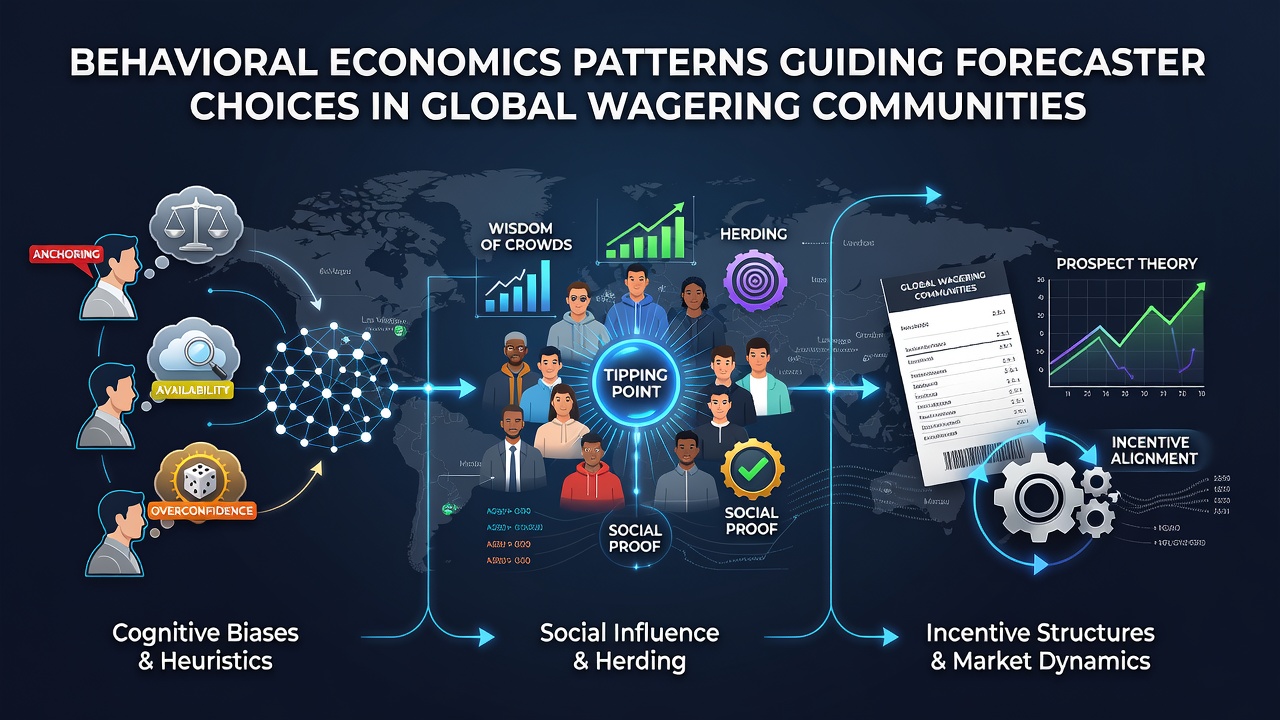
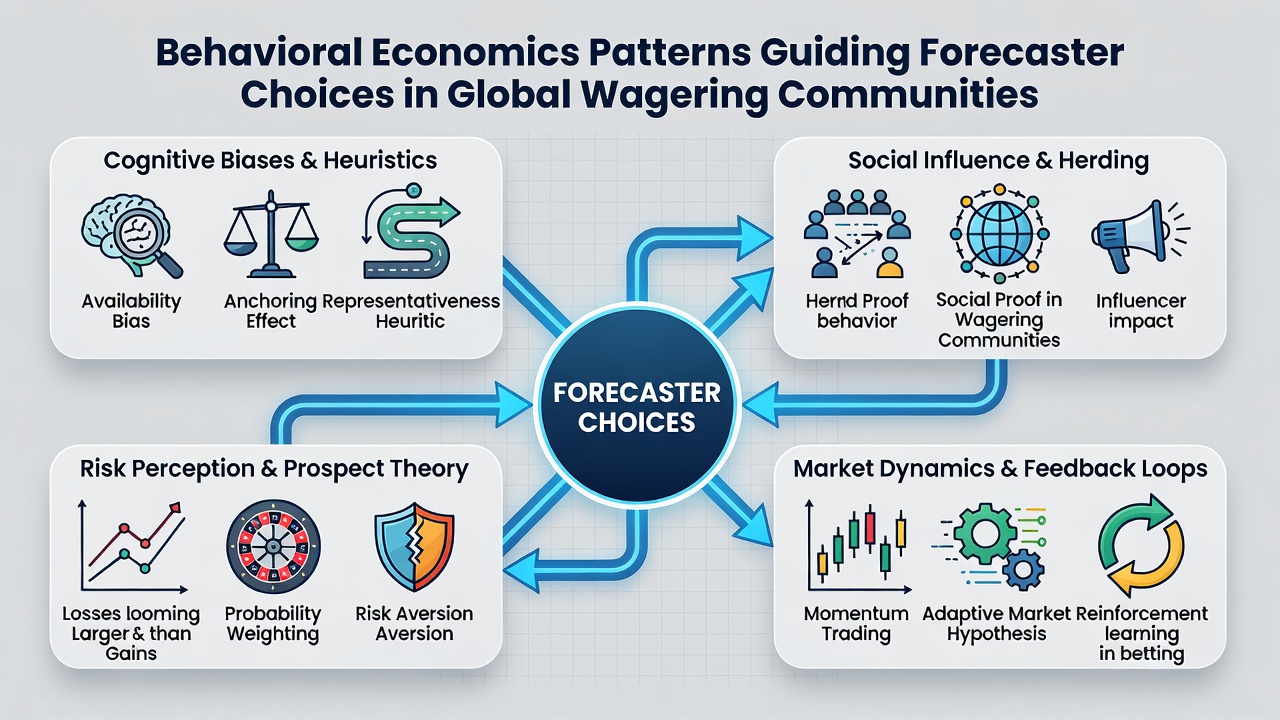
Forecasters operating in global wagering communities encounter systematic influences from behavioral economics principles that shape how they evaluate probabilities and select betting strategies, and researchers have documented these effects across multiple markets since the early 2000s.
Loss Aversion and Risk Calibration
Loss aversion leads forecasters to weigh potential losses more heavily than equivalent gains when setting predictions, and data compiled through July 2026 from international betting exchanges shows this pattern results in conservative adjustments to probability estimates during high-stakes periods. Studies conducted by the Australian Gambling Research Centre indicate that forecasters in horse racing and football markets often shift their recommended stakes downward after experiencing a sequence of near-misses, even when statistical models remain unchanged.
Participants in these communities frequently reference historical performance streaks when justifying forecast revisions, yet longitudinal records reveal that such adjustments rarely improve long-term accuracy. Instead they reflect an emotional response to recent outcomes rather than new information about underlying event probabilities.
Anchoring Effects in Odds Interpretation
Anchoring occurs when forecasters fixate on initial odds or early market movements and fail to update assessments sufficiently as new data emerges, and evidence from European betting platforms demonstrates that this bias persists across tennis and football forecasting circles. A 2025 analysis from the Canadian Centre on Substance Use and Addiction found that forecasters who reviewed opening lines first produced final predictions that deviated less than 12 percent from those anchors on average, regardless of subsequent line movements.
Community discussions amplify this tendency as members share initial reactions to fixtures, and those shared reference points then guide collective forecast revisions. Forecasters who deliberately review closing odds before finalizing selections show smaller anchoring effects according to the same dataset.
Herd Behavior and Social Proof Mechanisms
Herd behavior emerges when forecasters align predictions with prevailing community sentiment rather than independent analysis, and transaction volume data from Asian and Australian wagering networks indicates clustering around popular selections during major events. Research published by the National Bureau of Economic Research links this clustering to temporary inefficiencies where consensus forecasts diverge from statistical benchmarks derived from historical results.
Platforms that display aggregated tipster rankings accelerate the process because visible performance metrics encourage imitation, and observers note that forecasters with smaller followings often mirror the choices of higher-ranked peers within hours of publication. This convergence reduces forecast diversity even when underlying models incorporate different variables.
Overconfidence and Calibration Failures
Overconfidence manifests when forecasters assign narrower confidence intervals to predictions than historical accuracy justifies, and records from multiple international operators show that self-reported certainty levels exceed actual hit rates by margins of 15 to 25 percentage points across horse racing, football, and tennis markets. A collaborative report issued by the University of Sydney's Gambling Treatment and Research Clinic documented that forecasters who publish confidence ratings alongside selections maintain the same calibration gap over multi-year periods.
Those who review personal track records against stated confidence levels demonstrate modest improvements in subsequent calibration, yet most community participants continue to publish forecasts without such feedback loops. The pattern holds across both professional syndicates and individual contributors.
Confirmation Bias in Data Selection
Confirmation bias directs forecasters toward information that supports preexisting views while discounting contradictory signals, and case studies from South African and Singaporean betting forums illustrate how selective data presentation sustains forecast narratives. When forecasters encounter injury reports or weather updates that conflict with initial assessments, they frequently emphasize secondary statistics that preserve the original conclusion.
Automated tracking tools introduced on several platforms in 2024 allow users to compare forecast rationales against full datasets, and preliminary usage statistics indicate reduced confirmation effects among those who apply the tools consistently. Broader adoption remains limited because manual review requires additional time investment.
Conclusion
Behavioral economics patterns continue to influence forecaster choices throughout global wagering communities, and the documented effects of loss aversion, anchoring, herd behavior, overconfidence, and confirmation bias appear consistently across regions and betting formats. Regulatory bodies and research institutions track these dynamics through transaction and survey data, providing ongoing visibility into how cognitive tendencies interact with market structures. Continued monitoring through 2026 and beyond will clarify whether platform features or educational interventions alter the prevalence of these patterns over time.