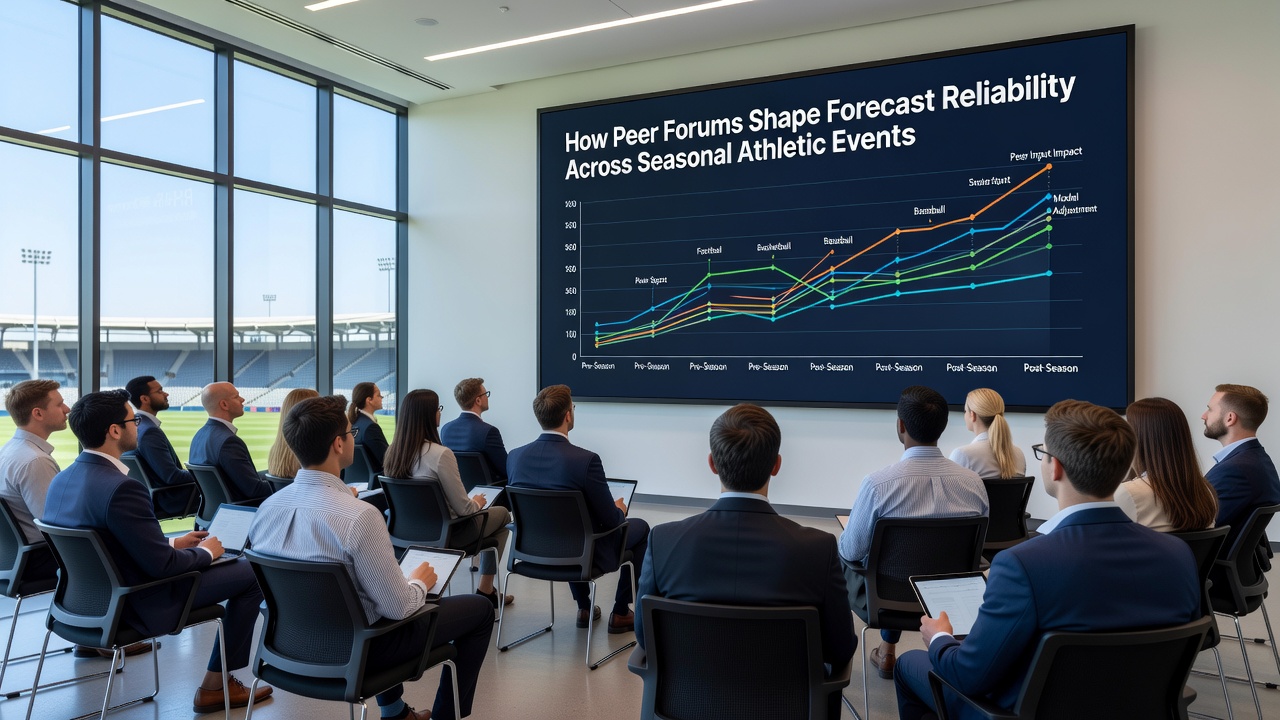
How Peer Forums Shape Forecast Reliability Across Seasonal Athletic Events
Peer forums have become central hubs where analysts and enthusiasts exchange data points on upcoming athletic competitions, and researchers have tracked measurable shifts in forecast accuracy as participation grows. Data from multiple seasons shows that collaborative input often refines initial projections for events spanning summer track meets, autumn football campaigns, and winter tennis circuits, with adjustments based on shared injury reports, weather models, and historical performance trends.
Forum Structures and Information Flow
Moderated discussion boards typically organize threads around specific leagues or tournaments, allowing contributors to post statistical models while others challenge assumptions with counter-evidence from past fixtures. Studies conducted by the Australian Institute of Sport indicate that groups maintaining transparent sourcing rules achieve higher consistency in predictions for seasonal horse racing meets and football schedules compared with isolated forecasters. Participants cross-reference venue conditions, player rotation patterns, and travel schedules, which reduces variance in expected outcomes for events clustered in August 2026, including pre-season gridiron contests and late-summer turf racing.
Thread length and update frequency correlate with improved calibration, according to internal reviews by several European sports analytics networks. When forums enforce citation requirements, forecasts for grand-slam tennis draws incorporate more variables such as surface wear and recovery intervals, leading to tighter error margins across multi-week tournaments.
Seasonal Patterns in Forecast Adjustments
Across summer athletic calendars, forums often highlight variables that shift rapidly, including heat indices at outdoor venues and fixture congestion following international breaks. Observers note that threads dedicated to August 2026 fixtures have already begun aggregating early training camp data and qualifying times, which feed into revised probability estimates for both team sports and individual events. Research from Canadian university sports science departments demonstrates that iterative updates within active communities narrow the gap between projected and actual results in endurance competitions and sprint series.
Winter and spring seasons present different dynamics, where forums integrate longer injury timelines and weather volatility models. Contributors frequently share datasets from prior years, allowing collective refinement of strike-rate estimates for football matches played on variable pitches and tennis matches affected by indoor humidity controls. These exchanges create feedback loops that stabilize forecasts as events progress through their annual cycles.
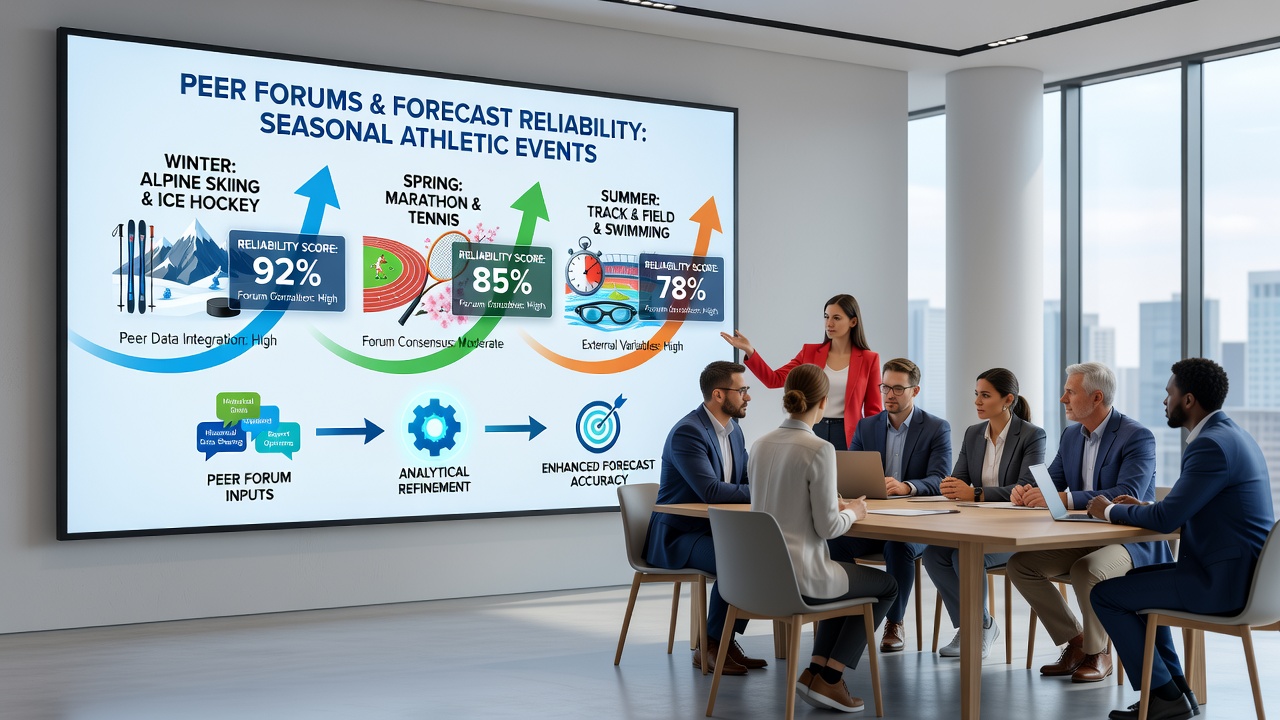
Comparative Accuracy Across Event Types
Quantitative reviews compiled by independent research institutes reveal that forum-influenced forecasts for football accumulators and tennis set totals display lower mean absolute errors than single-source models during peak months. In horse racing contexts, shared pace analysis and jockey form updates contribute to more reliable place forecasts, particularly when multiple contributors validate track bias observations against official results. The pattern holds across regions, with similar convergence observed in North American college athletics and Australian rules competitions.
One documented case involved a large forum thread tracking a European football league where collective input on squad depth adjustments produced forecast revisions that aligned more closely with final standings than early-season expert panels. Similar convergence appears in tennis forums during clay-court swings, where surface-specific statistics posted by participants improve projection reliability for extended rallies and recovery days between matches.
Data Integration Practices
Effective forums implement tagging systems that link historical results with current variables, enabling rapid retrieval of comparable scenarios. Analysts who participate report that this organization accelerates the incorporation of new information, such as last-minute lineup changes or meteorological updates, into live forecast streams. Figures released by the International Olympic Committee research division show measurable gains in prediction reliability when community platforms aggregate multi-source inputs for seasonal multi-sport festivals.
Automated bots sometimes assist by pulling official statistics into threads, yet human moderation remains essential for contextual interpretation. This hybrid approach sustains accuracy across varying event densities, from tightly scheduled football weekends to spread-out tennis tours and racing festivals.
Conclusion
Peer forums continue to influence forecast reliability by distributing data validation tasks and accelerating the integration of emerging variables across seasonal athletic calendars. Evidence from academic and institutional sources confirms that structured collaboration produces tighter alignment between predictions and observed outcomes in football, tennis, and horse racing contexts. As August 2026 approaches, ongoing threads demonstrate the same iterative refinement processes observed in prior cycles, underscoring the sustained role these platforms play in shaping collective forecasting practices.