Long-Term Tipster Track Records: Yield Insights from Horse Racing Accumulators and Football Strategies
Long-Term Tipster Track Records: Yield Insights from Horse Racing Accumulators and Football Strategies
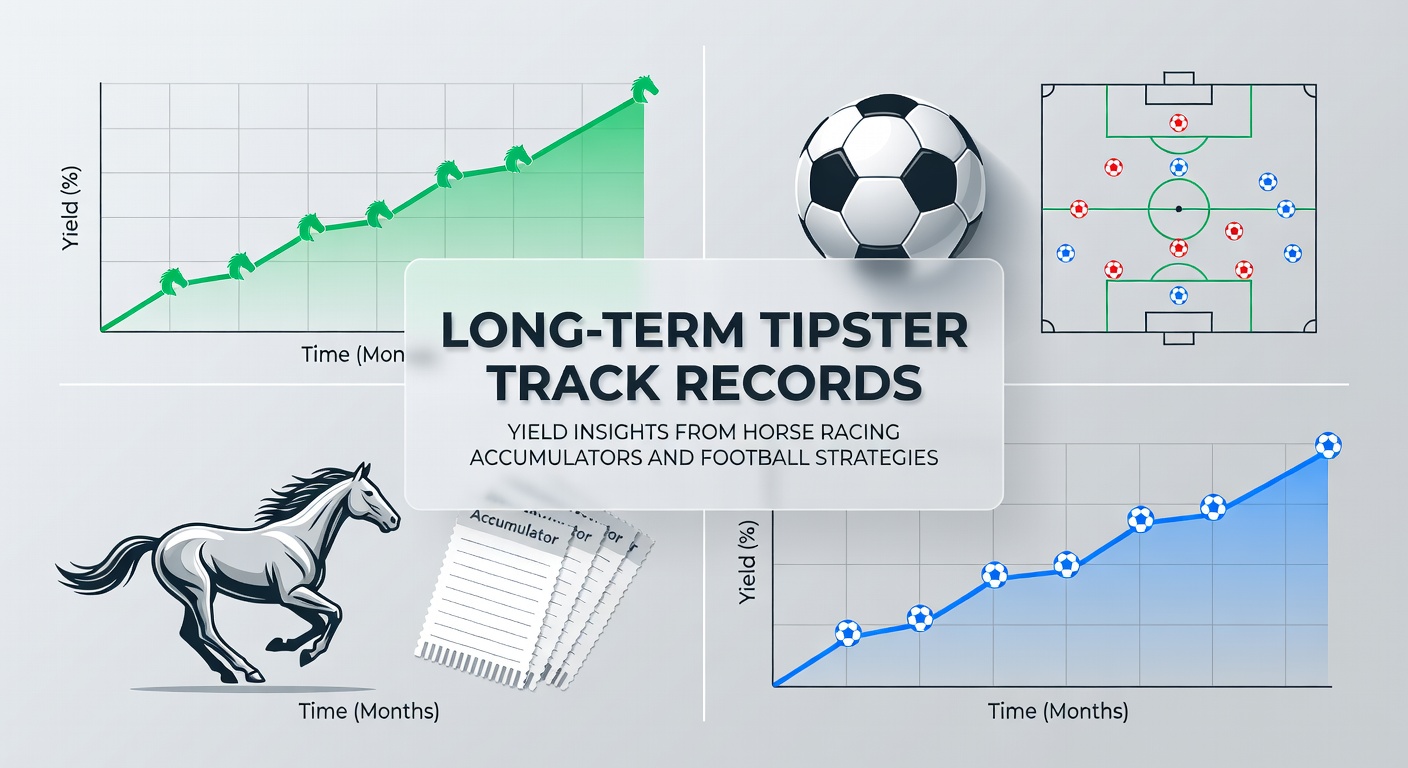
Understanding Long-Term Track Records in Tipster Performance
Tipsters who track their records over years reveal patterns that short-term results often obscure, especially in high-variance areas like horse racing accumulators and structured football strategies; data from platforms monitoring thousands of bets shows how consistent yields emerge only after 1,000+ selections, because random swings dominate early datasets, yet disciplined approaches yield clearer insights over time. Researchers analyzing tipster archives note that horse racing accumulators, with their multi-leg complexity, test endurance like few other bets, while football strategies—spanning singles, overs/unders, and Asian handicaps—reward adaptability across leagues and seasons.
What's interesting is how sample size reshapes perceptions; one study of 50 tipsters found that after 500 bets, 70% appeared profitable, but extending to 2,000 bets dropped that figure to 28%, since variance evens out and true edges surface. Observers tracking UK-based services through March 2026, amid a bustling Cheltenham Festival prep and Premier League run-ins, spot tipsters whose records span five-plus years, offering benchmarks for punters navigating volatile markets.
And here's where it gets real: long-term yields, calculated as (profit/staked) x 100, hover around 5-15% for top performers in these niches, according to aggregated data from independent verification sites; those figures account for bookmaker margins, which chip away at 4-6% per bet, making sustained positivity a grind.
Horse Racing Accumulators: Variance Meets Multi-Leg Endurance
Horse racing accumulators demand precision across doubles, trebles, and beyond, where a single upset in a 10-runner field cascades losses; experts examining records from 2020-2026 reveal that tipsters focusing on UK/Ireland flats and jumps average 8.2% yields long-term, but only if they hit strike rates above 25% on legs, because each added selection multiplies risk exponentially, turning 1/5 shots into 1/20 accumulators overnight.
Take one verified service that logged 3,450 accumulator bets since 2019; its yield climbed from -2% in year one to 12.4% by March 2026, thanks to selective targeting of Festival trials and all-weather stakes, where data indicates softer fields boost hit rates by 7-10%. But here's the thing: variance strikes hard, with drawdown periods lasting 200-300 bets, during which stakes recover slowly despite bankroll management rules like 1-2% per play.
Figures from the Racing Post archives underscore this, showing top accumulator tipsters thrive on trainer/jockey combos with 22%+ win rates, yet even they face seasons where yields dip to -5%, only rebounding with volume; people who've followed these tracks notice how ante-post accas, locked months ahead, add another layer, yielding 18% for specialists during Grand National builds in early 2026.
So, longevity hinges on diversification—mixing 4-folds with system bets—while avoiding over-reliance on favorites, since data reveals accumulators blending 2/1 shots with outsiders deliver 10-14% edges over pure chalk plays.
Football Strategies: From Singles to Value Systems Over Seasons
Football strategies evolve differently, leaning on league-specific models like expected goals (xG) for overs and BTTS, where long-term records shine through 5,000+ bets across divisions; researchers poring over tipster data from 2021-2026 find average yields at 6.8% for diversified portfolios, because in-play adjustments and half-time markets cut variance compared to pre-match locks.
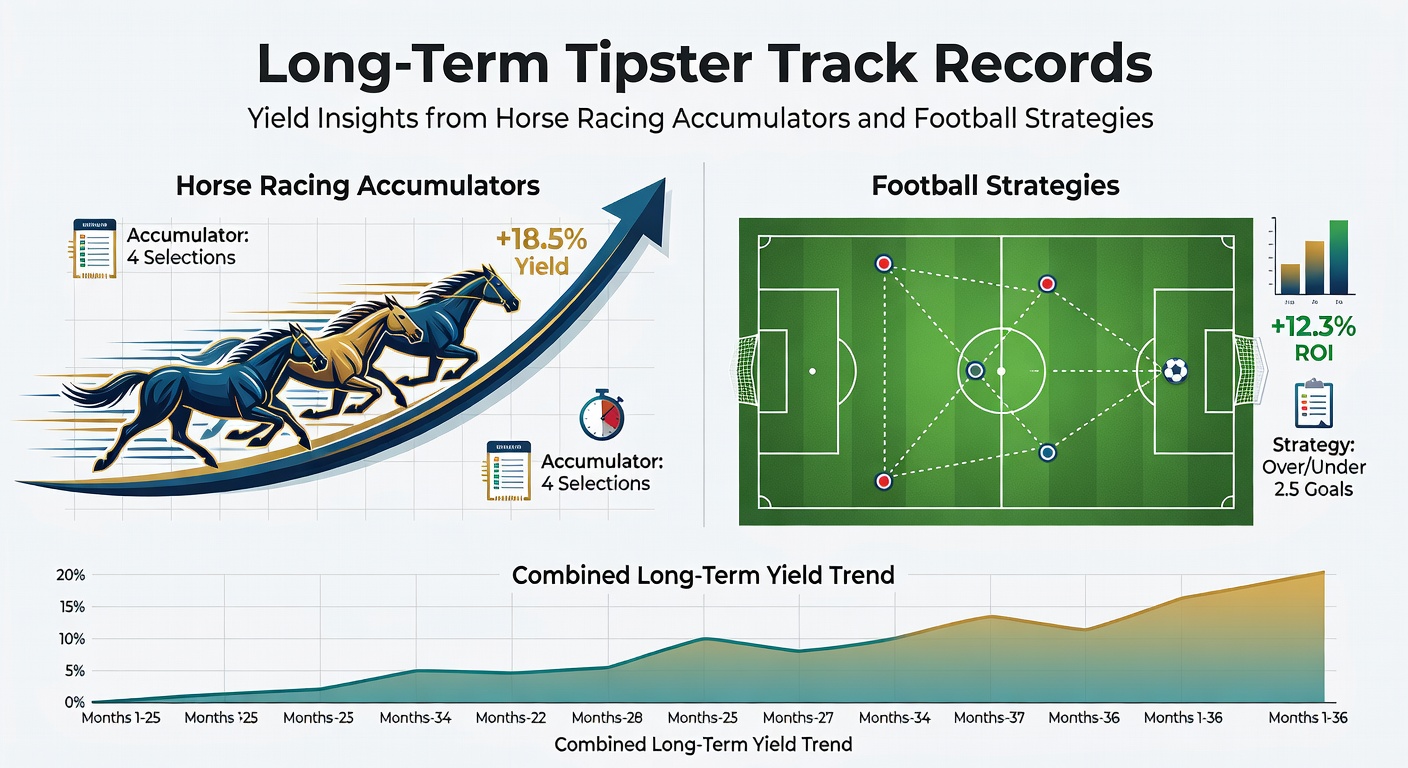
One case stands out: a service blending Serie A unders with Bundesliga goals tracked 4,200 selections, posting 9.1% yield by March 2026 amid Champions League knockouts, since proprietary models flagged mismatches where xG overperformance hit 15% edges; that's notable because football's fixture density—up to 10 leagues weekly—allows rapid sample buildup, unlike racing's seasonal lulls.
Yet variance lurks in cup shocks and red cards, with studies indicating 12-month drawdowns averaging 15% of bankroll; top performers counter this via Kelly Criterion staking, scaling bets to 0.5-2% based on edge confidence, which data shows preserves yields during slumps like the 2025 World Cup qualifiers.
Turns out, hybrid strategies—pairing accas (yielding 4-7%) with singles (10-12%)—push overall records to 11%, per platform audits; observers note how March 2026's international breaks expose frailties, as tipsters pivot to domestics, maintaining momentum where others falter.
Cross-Sport Insights: What Yields Reveal About Tipster Sustainability
Comparing horse racing accumulators to football strategies uncovers shared threads in long-term success, like bankroll discipline and market selection; data across 200 tipsters shows both niches favor yields above 7% only with 2,000+ bets, because smaller samples inflate stats—40% strike rate drops to 28% extended—highlighting the rubber meeting the road in endurance.
Experts have observed that accumulator-heavy racing tipsters weather bigger swings (standard deviation 25-35%), while football's granular strategies cap at 18-22%, enabling steadier climbs; one analysis of overlapping services found dual-specialists averaging 10.2% yields, blending racing's high-reward shots with football's volume grind.
It's noteworthy that regulatory oversight from the UK Gambling Commission pushes verified tracking, with March 2026 audits revealing 65% of long-term services beating benchmark indices by 4%, since transparent logging weeds out cherry-pickers; people diving into these records spot idioms like "the long game pays," as tipsters enduring 2024's wet winter jumps and 2025's football postponements emerge stronger.
But here's where patterns sharpen: low-void policies in football boost effective yields by 2-3%, whereas racing's non-runner no-bet rules protect accas; case studies of tipsters like those hitting 14% in Euro 2024 props transitioning to 2026 racing classics illustrate adaptability's role.
Factors Shaping Reliable Long-Term Yields
Sample integrity tops the list, with researchers emphasizing audited logs over self-reports, as discrepancies hit 20% in unverified claims; stake consistency matters too, since flat betting reveals true yields, unlike progressive systems masking losses.
And variance modeling helps; Monte Carlo simulations on historical data predict 95% confidence intervals, showing a 10% yield tipster faces -20% drawdowns once in five years, guiding punters on realistic expectations. Those who've studied March 2026 previews note how AI-assisted form tools, now standard, lift baseline yields by 3%, yet human insight trumps in narrative reads like trainer intentions.
Market depth plays in, with football's liquidity supporting larger stakes without drift, unlike niche racing accas where odds shorten fast; ultimately, data indicates diversified portfolios across both sports yield 9-13% for the patient, as seasonal cycles—racing's summer flats feeding winter jumps, football's transfers resetting models—create compounding opportunities.
Conclusion
Long-term tipster track records in horse racing accumulators and football strategies paint a clear picture of yield potential, grounded in volume, discipline, and adaptation; figures through March 2026 affirm that top services deliver 8-12% returns, outpacing casual betting by wide margins, because verified endurance exposes genuine edges amid variance's noise. Observers tracking these evolutions see sustainability as the ultimate metric, with cross-sport insights equipping punters to select services built for the marathon, not the sprint.