Surface Matters: Decoding the Impact of Track Conditions and Court Types on Expert Predictions for Racing, Soccer, and Tennis
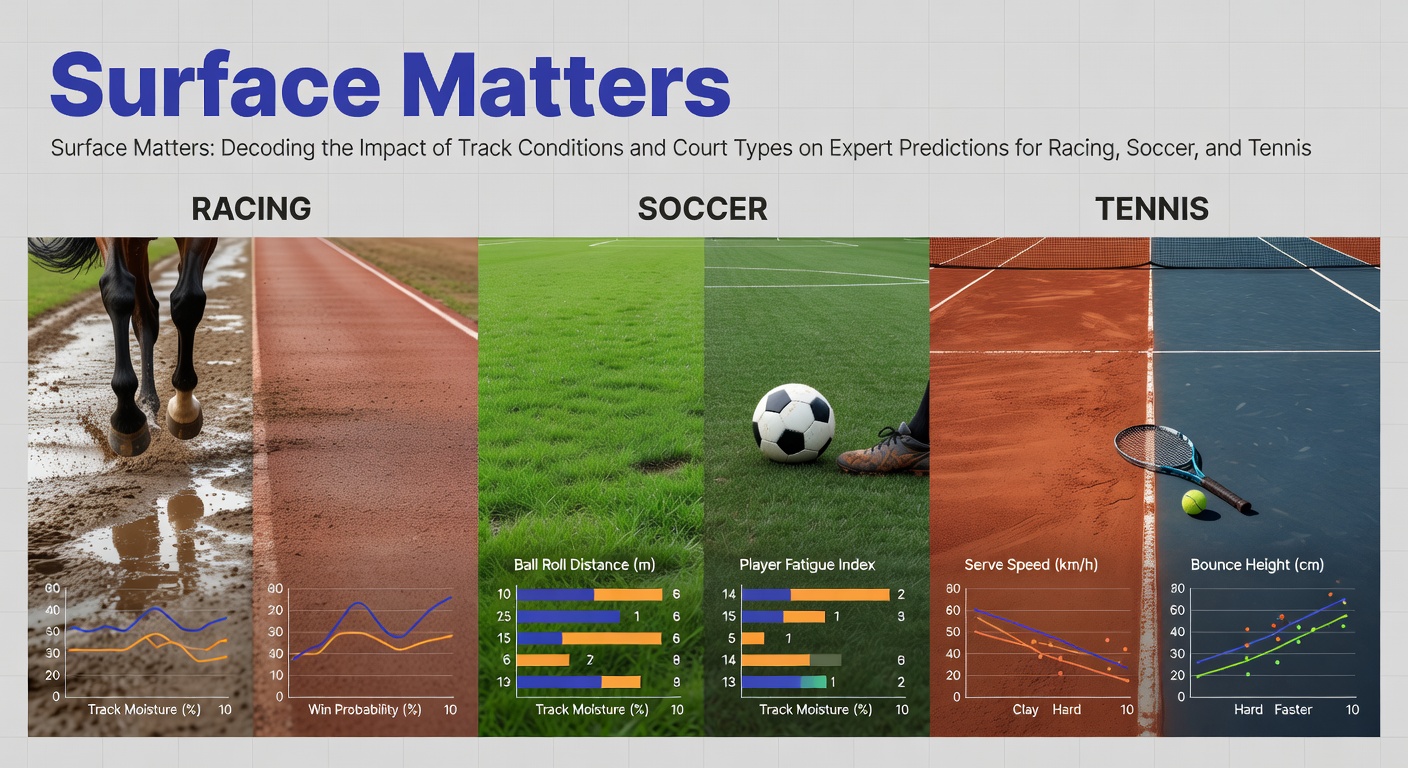
Track conditions and court surfaces shape how experts build predictions for horse racing, soccer, and tennis because these factors directly influence speed, endurance, and tactical choices. Data from major events shows that surface variables account for measurable shifts in outcomes, prompting analysts to adjust models accordingly rather than rely on generic form alone.
Track Conditions in Horse Racing
Racing authorities compile detailed going reports that classify turf as firm, good, soft, or heavy, and these classifications correlate with changes in finishing times and favorite success rates. Research indicates that horses with proven ability on softer ground often outperform expectations when rain alters the track, while speed-oriented runners struggle under the same circumstances. Observers note that trainers schedule entries around anticipated weather patterns, and prediction services incorporate historical surface-specific strike rates to refine their selections for upcoming meetings.
In May 2026 several major spring festivals will test these adjustments once more, with analysts examining how recent rainfall affects pace maps and sectional data. Experts have observed that wet conditions increase the value of hold-up horses because early leaders tire more quickly, leading tipsters to revise win probabilities based on updated ground reports rather than long-term averages alone.
Pitch Conditions in Soccer
Soccer pitches vary in grass length, moisture levels, and artificial versus natural surfaces, all of which affect passing accuracy, ball bounce, and player fatigue over ninety minutes. Studies conducted by European football federations reveal that teams accustomed to slick, short grass maintain higher possession statistics, whereas sides facing heavier pitches record fewer completed passes in the final third. Prediction models now include pitch moisture indices gathered from stadium sensors, allowing forecasters to recalibrate expected goal totals for matches played in differing weather zones.
Analysts who track league-wide data find that away teams perform closer to home results when pitches remain firm, but the gap widens on rain-softened surfaces where defensive errors rise. Those who study these patterns integrate current pitch reports into their assessments several days before kickoff, producing probability adjustments that reflect the specific venue conditions rather than generic team rankings.
Court Types in Tennis
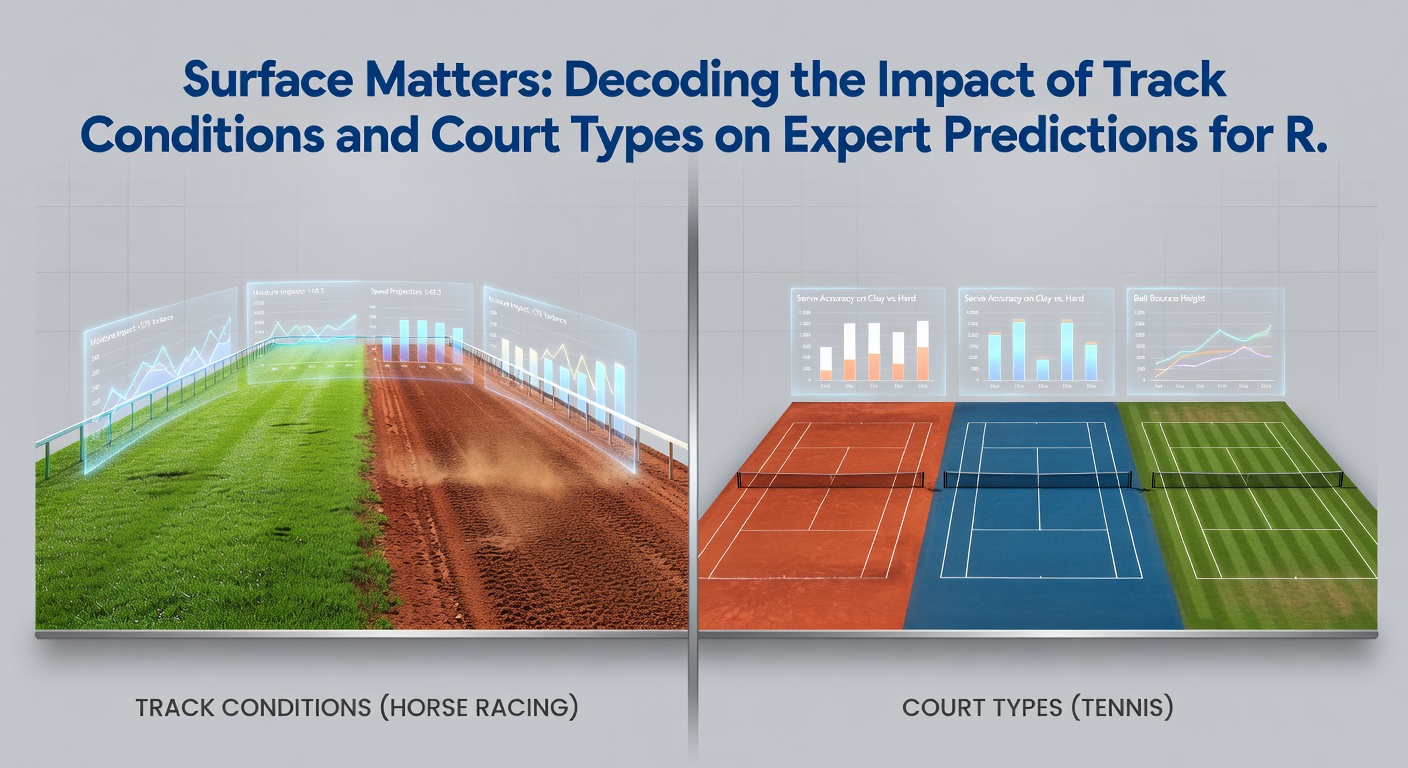
Tennis surfaces divide into grass, clay, and hard courts, each producing distinct statistical profiles for serve percentages, rally lengths, and break-point conversion. According to figures released by the International Tennis Federation, players with strong net approaches post higher win rates on grass, while baseline grinders accumulate more victories on clay where longer exchanges favor endurance. Hard courts occupy a middle ground that rewards balanced skill sets, yet even here slight differences in court speed from one tournament to the next shift expected outcome margins.
During the European clay-court swing leading into the 2026 French Open, forecasters routinely update models with surface-specific head-to-head records because many competitors display markedly different results depending on the footing. Data shows that service games held drop noticeably on slower clay compared with faster grass, prompting experts to adjust set-winning probabilities for each match accordingly.
Integrating Surface Data into Expert Predictions
Professionals who generate forecasts across these three sports compile surface databases that link historical results to current conditions, then apply those correlations to upcoming fixtures. This approach improves calibration because raw form ignores the physical realities of different tracks and courts. Researchers at institutions such as the Horse Racing Research Institute have documented how ground conditions alter speed figures, while parallel work by tennis statisticians quantifies court-speed ratings that modify player ratings before each event.
Prediction platforms now embed automated alerts when weather forecasts indicate surface changes, allowing rapid recalibration of odds and recommended stakes. Those who follow these updates report that accuracy metrics rise when surface variables receive equal weight with traditional performance indicators, demonstrating the practical value of condition-aware modeling in real-time betting environments.
Conclusion
Surface conditions remain a core variable in expert predictions for racing, soccer, and tennis because they produce repeatable effects on performance data. Organizations that maintain comprehensive surface records enable forecasters to refine probabilities with greater precision, and this practice continues to evolve as new measurement technologies capture more granular details ahead of each competition.